





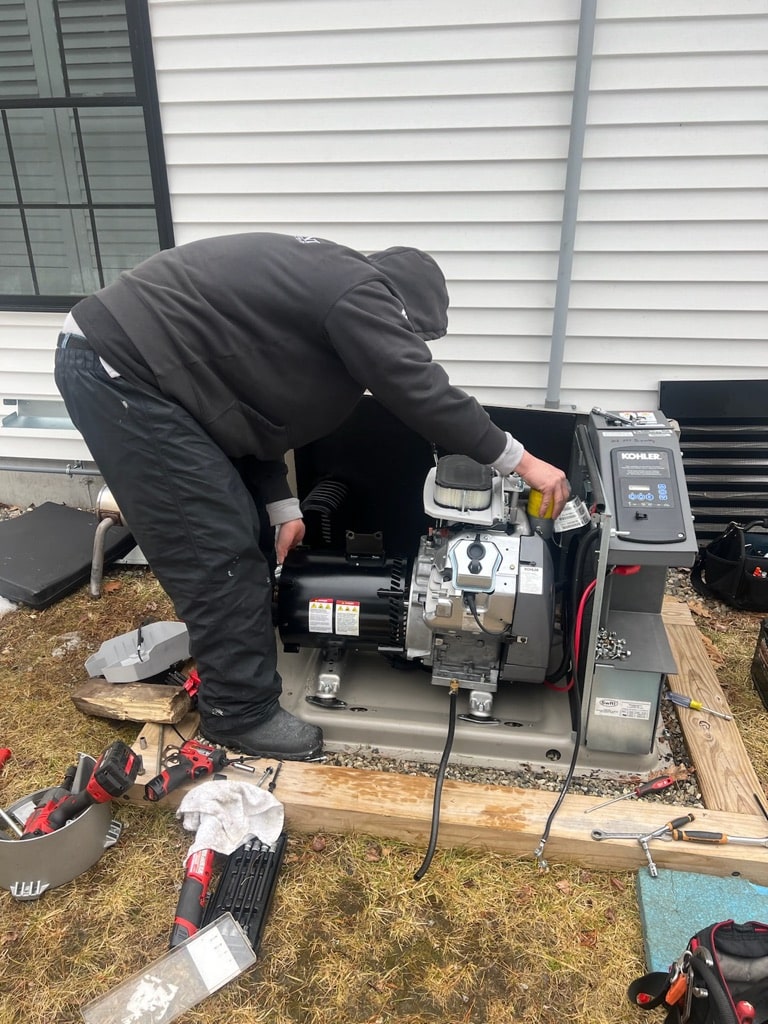
If you’ve lived through even one Maine winter, you already know the drill: an ice storm rolls through, the power goes out, and you’re left wondering whether the food in your freezer will survive or whether your pipes are about to freeze. It’s why so many Maine homeowners — especially out toward the coast and in the more rural stretches inland — end up looking seriously at a standby generator.
Kohler is one of the most established names in that conversation, and as a Kohler dealer based right here in Saco, we get the same handful of questions from almost every homeowner who calls us: How much does this actually cost? What does installation involve? And why should I go with a local dealer instead of whoever shows up cheapest on Google?
This guide walks through all three, plainly, without the upsell.
What Makes Kohler Generators a Strong Fit for Maine Homes
Kohler has been building generators for over a century, and the residential and light-commercial lineup is built around the same priority Maine homeowners actually care about: reliability when the grid goes down, not just when it’s convenient.
A few things matter specifically for Maine:
- Cold-weather performance. Kohler units are engineered to start reliably in genuinely cold conditions, which matters more here than in most of the country.
- Automatic operation. A Kohler standby system monitors your utility power continuously. When it senses an outage, it starts itself and switches your home over — typically within about 10 seconds — whether you’re home, at work, or away for the weekend.
- Fuel flexibility. Kohler generators run on natural gas or propane, both widely available across Maine, including in towns without natural gas service (propane tanks fill that gap).
If you want the deeper case for why a standby system in general makes sense here, we’ve written about that separately — see Here’s Why a Standby Generator Is the Best Way to Prepare for a Power Outage. This guide is about what it actually costs and involves.
How Much Does a Kohler Generator Cost in Maine?
This is the question everyone actually wants answered, and most dealer websites dance around it. Here’s a realistic starting framework, broken down by typical home size and generator capacity. These are ballpark ranges for the unit plus standard installation — your exact number depends on your home’s electrical setup, fuel source, and site conditions, which is why we always recommend a site assessment before treating any number as final.
Not sure what size you actually need? We’ve got a full breakdown here: Do You Know How to Choose the Right Capacity Generator.
What Affects Your Installation Price
A handful of factors explain most of the difference between the low end and high end of any quote you’ll get:
- Fuel type. Propane installations sometimes require a new or upsized tank; natural gas requires a gas line that can support the generator’s draw. If you’re not sure which makes more sense for your property, see How to Choose Between Propane, Natural Gas, and Diesel Generators.
- Electrical panel work. Older homes, or homes with a panel that’s already near capacity, sometimes need panel upgrades alongside the transfer switch installation.
- Site conditions. Distance from the gas/propane source, ledge or difficult ground for the pad, and how far the unit needs to sit from the house (code-driven, for noise and ventilation) all factor in.
- Permitting. Maine municipalities vary on what’s required for a standby generator install — we handle this as part of the process, but it’s built into the cost and timeline. (A dedicated guide to Maine permitting is in progress — for now, your installer should be confirming this for you up front, not after the fact.)
The Kohler Installation Process, Step by Step
At a high level, here’s what to expect once you’ve decided to move forward:
- Site assessment — sizing your home’s load and confirming the best location for the unit.
- Permitting — your installer should pull and manage this on your behalf.
- Site prep — pad installation and any electrical or gas-line work.
- Generator and transfer switch installation — the unit itself, plus the ATS that lets it take over automatically.
- Inspection and startup — a final inspection, system test, and a walkthrough so you know how it all works.
For the full step-by-step (including realistic timelines), see our complete breakdown: Generator Installation 101: What to Expect.
Why Choose a Local Kohler Dealer vs. a National Installer
It’s tempting to go with whoever quotes the lowest number, but a few things are worth weighing:
- Parts and service availability. A local dealer keeps common Kohler parts on hand and can typically get a technician to your home faster than a national installer dispatching from out of state.
- Familiarity with Maine permitting. Every town handles this a little differently. A dealer who installs across the state regularly knows the process cold.
- Accountability after the sale. If something needs servicing two years from now, you want the company that installed it still answering the phone.
If you’re at the stage of comparing installers, we put together a broader checklist here: 8 Tips for Choosing Experts for Generator Installation.
Frequently Asked Questions
How long does Kohler generator installation take?
Most residential installations take one to two days once permitting and any necessary site prep are complete. Permitting itself can add anywhere from a few days to a few weeks depending on your municipality.
Do I need a permit to install a generator in Maine?
In most Maine municipalities, yes — standby generator installation typically requires an electrical permit and sometimes a building permit, depending on the town. Your installer should confirm and handle this for you rather than leaving it to you to figure out.
What size Kohler generator do I need for my home?
It depends on what you want backed up — just the essentials (fridge, furnace, well pump) versus your entire home. A proper sizing assessment looks at your home’s actual electrical load rather than guessing by square footage. See our sizing guide linked above for the full breakdown.
Ready to get a real number for your home? Schedule a site assessment and we’ll walk your property, talk through your priorities, and give you an actual quote — not a ballpark.