





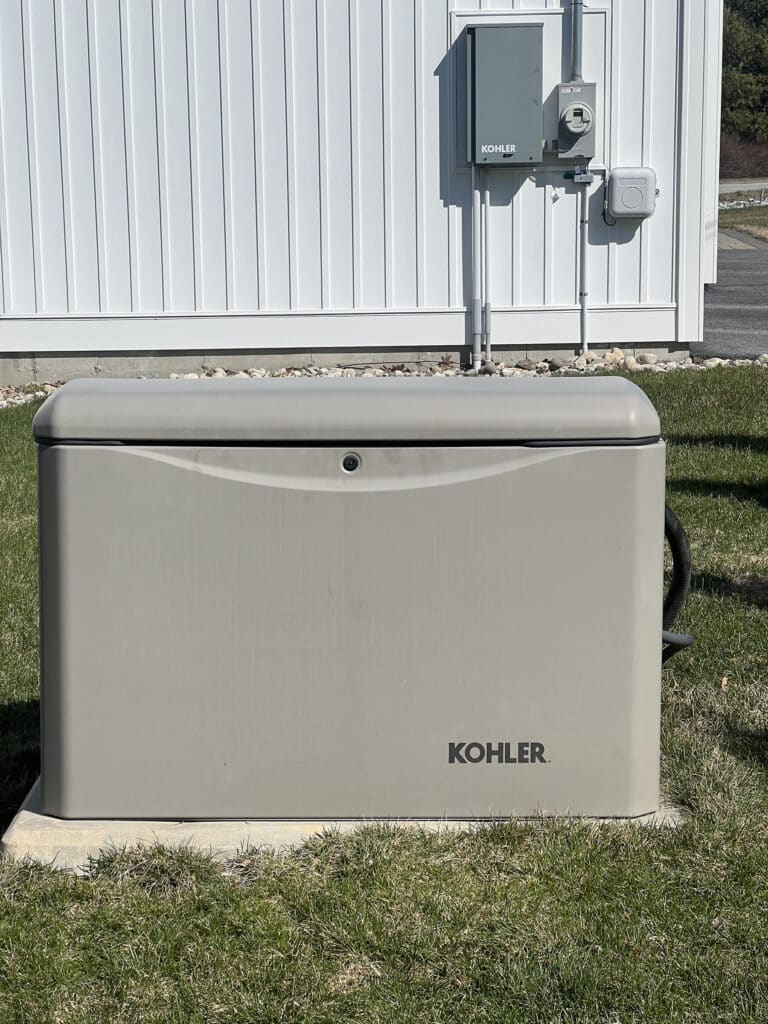
Deciding to install a standby generator is one thing. Actually going through the process — from that first conversation with an installer to the day your generator kicks on during an ice storm is another. And if you’re a Maine homeowner comparing Kohler dealers right now, you probably have more questions about the installation itself than you do about the generator on the pad.
This guide walks through what actually happens, step by step, when you install a Kohler standby generator at a Maine home. It’s specific to what’s involved here: Maine permitting, licensed local electricians, the weather considerations that shape site prep rather than a generic overview. If you’re at the earlier stage of deciding whether a Kohler is right for you or comparing installed costs, our pricing and installation guide is the better starting point.
For a completely brand-agnostic overview of standby generator installation (any manufacturer, anywhere), see Generator Installation 101: What to Expect. This piece is for homeowners who’ve decided on Kohler specifically and are installing in Maine.
Step 1: Site Assessment and Generator Sizing
Every Kohler installation starts with a technician visiting your home.They’re looking at three specific things: what you want backed up, where the generator can physically sit, and how your electrical and fuel systems will connect to it.
The sizing conversation is the most important part. A 14 kW generator will happily run your fridge, well pump, furnace, and a few essential circuits. A 26 kW will run your entire home including the AC. The size you need depends on what you’re willing to lose during an outage. Some homeowners want everything on, others just want the essentials so the pipes don’t freeze and the food doesn’t spoil.
Rather than guessing by square footage (a common mistake), a proper Kohler sizing assessment looks at your home’s actual electrical load. For the full breakdown of how sizing works and which capacity fits which use case, see Do You Know How to Choose the Right Capacity Generator.
The site walkthrough will also identify the best location for the generator itself. Kohler units need to sit a certain distance from windows, doors, and combustible materials — code-driven, not a preference. In Maine, we also factor in snow drift patterns, roof shed lines (you don’t want ice falling on the unit every February), and where the generator will be least noticeable both visually and acoustically.
Step 2: Permitting in Maine
This is where a Maine-based dealer really matters. Every municipality here handles standby generator permitting a little differently, and getting this wrong is the single most common cause of installation delays.
At minimum, most Maine towns require an electrical permit. Many also require a building permit if the pad and fuel connection count as new construction. Some coastal towns have setback rules driven by shoreland zoning that don’t apply inland. A dealer who installs across Maine regularly knows which town wants what and pulls the permits on your behalf rather than leaving you to figure it out.
A few things worth knowing before this step:
- Timeline varies widely. Some Maine towns turn permits around in a few days. Others take three or four weeks, especially in summer when everyone’s building. This is worth asking about upfront so your installation timeline is realistic.
- You’ll likely need a final inspection. After the installation is complete, most municipalities send an inspector to sign off on the electrical work before you can legally operate the generator.
- HOAs and condo associations sometimes have their own rules. If you’re in a development with a homeowners’ association, check their bylaws before starting; some require pre-approval for exterior equipment.
Your installer should be walking you through this at the site assessment stage, not surprising you with paperwork mid-project.
Step 3: Site Preparation and Concrete Pad Work
Once permits are in hand, physical work begins with site prep. Kohler standby generators sit on a concrete pad either poured in place or a pre-cast pad set on a prepared gravel base. The pad has to be level, properly drained, and rated for the weight of the specific unit.
In Maine, site prep can be more involved than in other parts of the country for two reasons:
- Ledge and shallow bedrock. A lot of Maine sits on granite. If your site has ledge close to the surface, the crew may need to work around it or bring in additional fill, occasionally requiring a rock hammer if the pad location can’t be shifted.
- Frost line depth. Maine’s frost line runs 4–5 feet deep in most of the state. Any pad or fuel-line trench work has to account for that so nothing shifts or cracks after the first hard freeze.
This is one of the steps most likely to add to your quoted price if unexpected conditions come up. A good installer will flag potential concerns during the site assessment rather than surprise you with a change order midway through.
Step 4: Electrical Work and Automatic Transfer Switch Installation
This is where the generator becomes an actual standby system. The automatic transfer switch (ATS) is the piece of equipment that makes everything automatic. When it senses the grid has gone down, it disconnects your home from the utility, starts the generator, and switches your home over to generator power. When utility power comes back, it reverses the process. All of this happens in about 10 seconds, whether you’re home or not.
A licensed electrician installs the ATS alongside your existing electrical panel. In older Maine homes, this sometimes reveals a second question: is the existing panel up to the load and up to code? Older 100-amp panels or panels with signs of aging can require an upgrade or replacement before the ATS can be safely tied in.
This is one reason getting a quote from an installer who does the site assessment properly matters. Discovering panel issues after work has started leads to change orders. Discovering them during the assessment lets you plan and budget properly.
Step 5: Gas or Fuel Line Connection
Kohler standby generators in Maine typically run on natural gas or propane. Diesel is more common in commercial and industrial installations. For residential, the choice comes down to what you already have on the property or can reasonably install.
For a full comparison of the trade-offs between fuel types: cost, runtime, storage, refueling — see How to Choose Between Propane, Natural Gas, and Diesel Generators.
What matters at the installation stage is that the fuel line has to support the generator’s peak draw. For natural gas, that sometimes means the utility has to upsize the meter or run a larger service line, a separate step that adds time to the project. For propane, it may mean a new or larger tank, or a second tank in parallel to give you enough runtime during an extended outage.
The fuel connection is usually done by either a licensed gas fitter (natural gas) or your propane supplier (propane), coordinated by your generator installer. It’s a step that often runs in parallel with the electrical work rather than sequentially, which is why the whole installation can typically finish inside two days.
Step 6: Inspection, Startup and Owner Walkthrough
Once installation is complete, three things need to happen before you’re actually running: the final municipal inspection, the manufacturer startup, and your owner walkthrough.
The startup is a technician commissioning the unit: checking oil levels, coolant, battery, running through the automatic startup sequence, verifying the transfer switch operates correctly under simulated grid loss, and testing the load transfer. This isn’t optional. Kohler warranties require professional commissioning, and skipping it can void coverage from day one.
The walkthrough is where you learn how to live with the system. You’ll cover:
- How to read the control panel and interpret status indicators
- The weekly self-test cycle (the unit runs itself briefly on a schedule — don’t be alarmed the first time)
- What to do if the unit doesn’t start (see What to Do If Your Generator Won’t Start for the full troubleshooting flow)
- What ongoing maintenance is included and what isn’t (this is where a service plan conversation usually starts)
How Long Does the Whole Process Take?
The physical installation from breaking ground to inspection is usually one to two days for a residential Kohler system. What varies is what happens before and after.
A realistic timeline for most Maine installations, from the day you sign the contract:
- Week 1: Site assessment finalized, unit ordered, permit applications submitted
- Weeks 2–4: Permits approved (varies by town), unit delivered, site prep scheduled
- Installation days: Pad set, generator placed, electrical and fuel work completed
- Following week: Municipal inspection scheduled, manufacturer startup, owner walkthrough
Total elapsed time is typically three to six weeks from contract signing to a fully operating system. During storm season or peak building periods, permit approvals can push that longer. In quieter months it can compress. If a dealer promises a same-week install without seeing your property first, that’s a red flag. It usually means permits are being skipped or the site assessment is being rushed.
What to Ask Before You Sign a Contract
Before you commit to any Kohler installer in Maine, a handful of questions will save you from the most common problems:
- Are you a certified Kohler dealer? Not all electricians who can install a generator are authorized Kohler service centers. Authorization matters for warranty claims and factory parts access.
- Do you handle permitting? Some installers push this back to the homeowner. A dealer who handles it removes a real headache and typically has established relationships with local building offices.
- Who does the electrical work? It should be a Maine-licensed electrician, either on staff or a documented subcontractor.
- What does your service response look like? Ask specifically about after-hours and weekend response. Standby generators fail during outages, which are usually at inconvenient times.
- What ongoing maintenance do you offer? A generator that isn’t maintained will fail when you need it. Kohler recommends annual service. Ask about service plans upfront so you know what post-install support looks like.
For a broader checklist of what to evaluate when choosing any generator installer, see 8 Tips for Choosing Experts for Generator Installation.
Ready to Get Started?
The installation process is straightforward when it’s run by an installer who’s done it hundreds of times in Maine — and it turns into a series of frustrating surprises when it isn’t. Getting the site assessment right is the single most important step. Everything else follows from that.
If you’ve already worked through pricing and you’re ready for a site visit, that’s the natural next step. If you’re still comparing what a Kohler installation would cost, start with our pricing and installation guide first.
Ready to walk your property with a Kohler dealer? Schedule a site assessment and we’ll cover sizing, siting, fuel, permitting, and a realistic timeline for your specific home — no obligation to buy.